Thursday, 12 January 2012

Narrative

In films the plot and conversations between characters is essential to making a good movie, if the dialogue is sloppy or the plot is bad, the audience may lose interest in what is happening in the film and what is going on. There are ways in which that you can create more excitement in an audience.
You can create alot of questions for example for the audiences in order to make them interested in what is happening and wonder what certain things have to do with the film. this is an example of how a simple device can improve a film dramatically by making the audience interested in it.
A plot has to have many characters and ideas to it if you are looking to make the film a deeper experience for the audience to view, and by linking them to the story , it can create a better movie, an example of simultaneous storylines branching from a main film is the departed, which has many main characters revolving around a story with many branch stories.

General film language

More certain film terms.
Continuity editing: When filming certain actions, we have to make sure that they look realistic and fluid in comparison to what the action would look like in everyday life. For example if filming someone opening and closing a door, you have to make it look like one fluid motion and not disjointed, if it does look this way, this is bad continuity and can make the audience aware of bad filming.
Enigmas: Enigmas are questions that are given to the audience by what is happening on screen, these can be such questions like who done it? why are they doing that? ect, these questions keep an audience intersted in what is happening on screen.
CliffHangers: These are events that happen at the end of a scene that make the audience wonder whats going to happen to the people in question in the scene? this could be danger or trouble.

Suspense in Thrillers

Thriller movies rely on suspense in order to create an atmosphere that provokes the viewer into wanting to watch the rest of the movie whilst at the same time gives them an element of power as they know what some of the characters don't know on screen. This creates a will they/ wont they scenario of questions that revolves around the action on screen.

An Example of this is Alfred Hitchcock's "Rope"

In rope the story revolves around to men who have murdered someone in a test of intelligence to see whether or not they can get away with it . They store the body in a chest and cover it with a cloth. They then have a party in which they place decorations and food on the chest as they attempt to fool guests and get away with murder. The suspense lies with the audience in that we know that the body is in the chest but we then question whether or  not the men will be found out by any of the guests.

Maguffin

A Maguffin is a object in a movie that is the main character desires and although it may be the object of a film, it doesn't mean it is the central point of conversation and conflict in the film.

For example: In Alfred Hitchcock's film Notorious, the plot is that an American spy sends a woman to spy on her husband who is a Nazi, and is suspected to be doing something wrong. Infact the Nazis are plannig to steal uranium. In this case, the Maguffin in the Uranium.

Film Analysis

Here is some evaluations of the beginning of films that come under the thriller genre:

MEMENTO: Momento has a very interesting beginning but at the same time still come into the thriller genre by some of the conventions that it holds. For example it has a central question for the audience which is based on the story, so for example in Momento, the main questions are who and what is the man looking for? as the film is made backwards, we get those questions. It has a gritty style to it that is common in thrillers, and has some very graphic action that is common in violent, murder happy thrillers.

BRICK: Brick has a shocking opening that once again makes the viewer wonder what has happened prior to the scene we start with. It begins with a boy looking anxiously over the other side of a stream at a girl who appears to be dead. This immediately gives us a question as to what has happened, the music adds to the tension as well as there is a creepy xylophone style song playing in the background. When we realize he is a schoolboy at the end, we see a creepier side to the story.

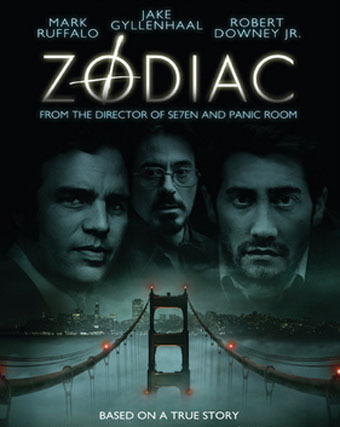
ZODIAC: Zodiac's suspense during the opening of the film comes from the murder that occurs when the married woman takes a younger man out to the woods during the 4th of July. The music does a great job of setting the mood at ease by being quite relaxed, but when the murderer returns back in his car we realize that there is a problem. The killing itself gives us the question  of who killed them, and why?

Chuck Jones' 'rules'.

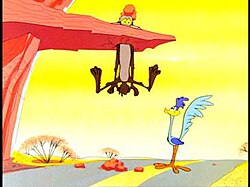
When creating the character and scenarios for the RoadRunner cartoon segment in Looneytoons. Creator Chuck Jones created a set of rules that they must obide by when creating the cartoon. For example, one of the rules was that the coyote may never harm the road runner and the road runner may not harm it, but only mock it by saying "meep meep". This is an example of rules in a production.

The road runner never actually touches the Coyote.

Films tend to have rules aswell depending on the genre and also just filming in general. An example of this is the 180 degree rule, this means that the camera must never flip over to the other side of a conversation during a scene, this is because if done otherwise the audience can gbecome confused with whats going on, on screen.

Monday, 28 November 2011

Alfred Hitchcock

Alfred Hitchcock was born on the 13th of August 1899, and died on the 29th April 1980. He was a British born film director and is widely regarded as the master of the thriller genre. He's distinct camera style and  vision allowed him to be in the Movie business for 50 years. His camera style matched that of a human's 'gaze' which made his films more involving for the audience. He created great films that became Hollywood classics such As North by Northwest (1959), Psycho (1960) and Birds(1963). He never watched his movies as he knew what they would look like shot for shot already as he storyboarded every film before he made it.
Quotes "The only way to get rid of my fears is to make films about them"
"There is no terror in the bang, only in the anticipation of it"
"Always make the audience suffer as much as possible"

Here is a picture of Hitchcock on a poster for "Alfred Hitchcock presents..." It was a very big thing in america showing 30 minute dramas created by Hitchcock.

This is a poster from his famous film Psycho: