
Monday, 30 January 2012
Problems with filming
On the day of filming , we realised that none of us had taken a camera out in order to film. Luckily we had someone acting in our group that had their own camera for us to film with. Along with the absence of the camera we had no tri-pod either to rest the camera on. To get around this problem we constructed a tri-pod out of a washing rack and a shoe, a picture of which i will post shortly. Despite how it may sound the camera stayed very still and we were able to film a very good movie with some very good shots from what we had.


Filming
We filmed the vast majority of our film on sunday after deciding to film it at Chloe's house as her house fit the description we was looking for the best. Whilst we were there we decided to change the ending slightly in order to bring in a separate location and slightly more questioning ending.
What we changed:
- Rather than the main character dying at the end after a blow to the head. We changed it so that when he is hit on the head by the antagonist he wakes up afterwards in a garage surrounded by tools and torture equipment, this implies to the audience that he is about to be tortured or killed, but at the same time leaves then with the questions such as why? where? who? ect, we felt that Tori's garage fit this description best and we are going to film that scene shortly.
Friday, 27 January 2012
Script and Characters Interactions
As there are no words in our film it is important that we create a good suspense from the sounds of the man's daily routine and the music he hears everyday, the scripting is there easy as we can now focus more on the actual screen action rather than possible poor acting of students.
Final filming details of our thriller opening
These are:
Name of film; Routine
Music; 'Oh me, Oh my' - The 99's (permission givevn)
Titles;
"A CCTF Production"
"Starring Conor Wilkins and Liamonas Andrejouskas"
"Music By Tori Wheatley"
"Casting By Conor Wilkins"
"Edited By CCTF"
"Directed By CCTF"
Music; 'Oh me, Oh my' - The 99's (permission givevn)
Titles;
"A CCTF Production"
"Starring Conor Wilkins and Liamonas Andrejouskas"
"Music By Tori Wheatley"
"Casting By Conor Wilkins"
"Edited By CCTF"
"Directed By CCTF"
Filming Areas
We needed certain things in order to stick as closely as we can for our film, this meant evaluating each other's houses to see who's house fits the description best for what we need, such as a bathroom with a mirror next to it, a bed with a bedside table, so we are going to use Chloe's house to film. This is the type of thing we were looking for.


This shows the sort of things we my need and why as an example.
Audience research evaluation
Along with the survey we created we also made a questionnaire for people to answer regarding Thrillers. This involved questions about preferences and things they might consider when discussing thrillers. We found that many people liked the idea of suspense in a thriller and the idea of leaving the audience with questions on the film. Here's an example of someone's response:
 (This shows one of many responses that said "suspense" when we asked them to write down 3 words they would associate with a thriller.)
Thursday, 26 January 2012
Music

Script and sound for the movie
We wet with the idea that our opening wont have any dialogue but will have some distinctive sounds to it that help the audience get more involved in the main character's daily routine , for example really making the sound of the man brushing his teeth loud and the image right in the face of the camera, this and many other jump cuts of the man doing mundane but loud things helps the audience get more involved with the opening.
Title sequence research
By looking on artofthetitle.com, w can see films that have good and effective title sequences by analyzing stills fro their opening credits. The title sequence of a movie is important as it can help set the tone for a film and help us see who has made the movie.
An effective and good movie title sequence is Vertigo:

-Vertigo's title sequence shows close ups of the main character with the credits so we can be quickly introduced to who is in the film and also by looking at her facial expressions we can figure out her emotions.
An effective and good movie title sequence is Vertigo:

-Vertigo's title sequence shows close ups of the main character with the credits so we can be quickly introduced to who is in the film and also by looking at her facial expressions we can figure out her emotions.
The name of our Production Company
We went with the name "CCTF" for our production company, the name comes from our first name initials together, and Conor is making the ident for our production, which i'll explain when its finished.
Wednesday, 25 January 2012
Red Herrings
This is a device that diverts the audience from the significance of something of importance in a film, this can work with other devices such as a enigma. An example of this is in Alfred Hitchcock's "North by Northwest", in which suspense is created.


Call sheet
Date - 26th January
Location - 2 Bull lane , Dagenham , Essex
Cast - Conor Wilkins, Laimonas Andriejauskas
Crew - Tori Wheatley, Frankie McFarlane , Conor Wilkins , Chloe Bencini-Harding
Props - bed, alarm clack , clippers, towels , knife , fake blood, shower , mirror , mask, cereal, toothbrush , toothpaste.
Costumes - man has a suit, well dressed, murderer wearing all black and a mask.
Location - 2 Bull lane , Dagenham , Essex
Cast - Conor Wilkins, Laimonas Andriejauskas
Crew - Tori Wheatley, Frankie McFarlane , Conor Wilkins , Chloe Bencini-Harding
Props - bed, alarm clack , clippers, towels , knife , fake blood, shower , mirror , mask, cereal, toothbrush , toothpaste.
Costumes - man has a suit, well dressed, murderer wearing all black and a mask.
Monday, 23 January 2012
Title Sequence Analysis
Here is a selection of thriller title sequences that are effective:
IN THE CUT:
-It has creepy sounding music that contradicts the atmosphere of the opening scene.
-It has a gritty, slightly dirty tone to the filming.
-The actual titles are small and sharp looking
-The shots have always got something creepy in them, such as the man with the clinched fist in a leather glove.
-The title of the film comes up like blood from the 'cut' on the ice.
SE7EN:
IN THE CUT:
-It has creepy sounding music that contradicts the atmosphere of the opening scene.
-It has a gritty, slightly dirty tone to the filming.
-The actual titles are small and sharp looking
-The shots have always got something creepy in them, such as the man with the clinched fist in a leather glove.
-The title of the film comes up like blood from the 'cut' on the ice.
SE7EN:
Friday, 20 January 2012
My survey
This is a link to my survey that people can take in order for us to understand what people want to see in a thriller movie.
http://www.surveymonkey.com/s/R9VVSGP
We'd appreciate it if you took part in our survey.
Here's a print screen of my survey to show you how it looks in a small sample:

http://www.surveymonkey.com/s/R9VVSGP
We'd appreciate it if you took part in our survey.
Here's a print screen of my survey to show you how it looks in a small sample:

Wednesday, 18 January 2012
Going into our film...
I now understand the basic elements that go into a successful film and what it takes to make a film effective and enjoyable for the audience. Considering we are only making the first couple of minutes of the film it is a challenge to make it shock the viewers but we feel our idea has a good idea for the opening and will leave the viewers many questions , which is something that great thriller movies do.
A good example of a film that makes us ask a lot of questions is memento :

This is a film that has a lot of questions surrounding its opening as it is filmed as though the story is in reverse.
A good example of a film that makes us ask a lot of questions is memento :
This is a film that has a lot of questions surrounding its opening as it is filmed as though the story is in reverse.
More audience research

Thursday, 12 January 2012
Treatment sheet
Here are the details of our treatment sheet:
OUTLINE OF IDEAS:
-Guy has OCD, wakes up everyday to the same routine, when one day the routine changes and everything is messed up.
-I.e , alarm is on the other side of the bed.
-There's writing on the mirror and reports on radio suggest that he has murdered someone.
-Finds a body and a bloodied knife.
-Then we realize its someone else as someone comes from behind him and strikes him down.
Last shot he is looking at the mans feet walk away as the audience is left with a "who done it?" question.
WHAT RESOURCES WILL YOU NEED? (ACTORS PROPS SETTINGS):
-Double bed / Bedroom
-Alarm clock
-Cereal / kitchen
-Toothbrush / toothpaste / bathroom
-Street door
-Knife
-Fake blood
-Killer mask
-Killer for actor
-Man to play the OCD man
-Dead body actor
JUSTIFICATION OF IDEAS IN RELATIONSHIP TO GENRE:
-"Who dunnit?" idea
-Long suspens building opening
OUTLINE OF IDEAS:
-Guy has OCD, wakes up everyday to the same routine, when one day the routine changes and everything is messed up.
-I.e , alarm is on the other side of the bed.
-There's writing on the mirror and reports on radio suggest that he has murdered someone.
-Finds a body and a bloodied knife.
-Then we realize its someone else as someone comes from behind him and strikes him down.
Last shot he is looking at the mans feet walk away as the audience is left with a "who done it?" question.
WHAT RESOURCES WILL YOU NEED? (ACTORS PROPS SETTINGS):
-Double bed / Bedroom
-Alarm clock
-Cereal / kitchen
-Toothbrush / toothpaste / bathroom
-Street door
-Knife
-Fake blood
-Killer mask
-Killer for actor
-Man to play the OCD man
-Dead body actor
JUSTIFICATION OF IDEAS IN RELATIONSHIP TO GENRE:
-"Who dunnit?" idea
-Long suspens building opening
Possible Audience?
For our film I would suggest that the audience would be best suited to an almost horror like fanbase as there is a quick early murder that makes the viewer ask alot of questions. Because it would seem at first that there is no motive it makes them question why this man in particular would be targeted for a murder. There may be plans to place slight clues in the opening sequence where we realize something is wrong, but not too many as it is the opening of the film. Because of this I feel that the idea of a suspense, shock type of audience would be perfect for the audience.
Film's name
We decided that the name of our film will be "Routine."
We choose this idea because it explains somewhat what the movie is about. It sets around a man who has Obsessive compulsive disorder and lives with the same routine everyday of his life. For example, the alarm goes off at the exact same time everyday, he puts his slippers o, eats the same cereal ect. It all changes one day when the mans routine is interrupted by a series of breaks in his daily chain of events that are out of the ordinary, for example when he wakes up the alarm is on the other side of the bed, his slippers are gone and the cereal is empty. When the man eventually goes down stairs he is hit by an unknown figure and thats where the beginning ends, the rest of the film would be based on finding the killer.
We choose this idea because it explains somewhat what the movie is about. It sets around a man who has Obsessive compulsive disorder and lives with the same routine everyday of his life. For example, the alarm goes off at the exact same time everyday, he puts his slippers o, eats the same cereal ect. It all changes one day when the mans routine is interrupted by a series of breaks in his daily chain of events that are out of the ordinary, for example when he wakes up the alarm is on the other side of the bed, his slippers are gone and the cereal is empty. When the man eventually goes down stairs he is hit by an unknown figure and thats where the beginning ends, the rest of the film would be based on finding the killer.
Our film
In my group i am working with Chloe Bencini Harding, Conor Wilkins and Tori Wheatley. We are designing and making a thriller that fits all criteria for the course , we well try to keep the quality good on the film and are currently discussing the idea of the film, we an idea , which i will post about when finished.
Past Student's work
We looked at work former classes have produced in order to learn from what they had done well and what mistakes they had made whe filming their own thrillers in the past. To do this we looked at a selection films made by past students, which varied in different types of thriller and quality.
From this i learned:
-That you need to have good continuity in your shots , such as door opening looking realistic
-That costume and makeup ect, must be good in order to enhance the visual effect of the film
-That the plot has to be solid in order for the film to make sense
-The film has to be shot well to look presentable
-Minimal dialogue is better because you cant rely on the acting of students in the film
- Settings have to be good because they can ruin your shot if not planned correctly
From this i learned:
-That you need to have good continuity in your shots , such as door opening looking realistic
-That costume and makeup ect, must be good in order to enhance the visual effect of the film
-That the plot has to be solid in order for the film to make sense
-The film has to be shot well to look presentable
-Minimal dialogue is better because you cant rely on the acting of students in the film
- Settings have to be good because they can ruin your shot if not planned correctly
More Thriller features
More thriller features:
-Protagonist and antagonist
-Deaths
-A problem that needs to be solved
- A kidnapping
-"Walk away shot" from an explosion by the main character
-Mind games
-Plot "twists"
-Dramatic music
-A trade between two parties
-Ticking clock
-Protagonist and antagonist
-Deaths
-A problem that needs to be solved
- A kidnapping
-"Walk away shot" from an explosion by the main character
-Mind games
-Plot "twists"
-Dramatic music
-A trade between two parties
-Ticking clock
Thriller Features
List of things usually in thrillers:
-Usually set in Big cities
-Usually follows a "Hitman" style character
-Has sneaky sections where the character is trying to avoid people
-Evil, enemy characters that the protagonist conflicts with
-Fast, jumpy edits to show action and tension
-Femme Fatale character
-Darker areas are used in sneaky sections
-Always a fight scene
-Always a chase
-Cliff Hangers
-Usually set in Big cities
-Usually follows a "Hitman" style character
-Has sneaky sections where the character is trying to avoid people
-Evil, enemy characters that the protagonist conflicts with
-Fast, jumpy edits to show action and tension
-Femme Fatale character
-Darker areas are used in sneaky sections
-Always a fight scene
-Always a chase
-Cliff Hangers
Narrative
In films the plot and conversations between characters is essential to making a good movie, if the dialogue is sloppy or the plot is bad, the audience may lose interest in what is happening in the film and what is going on. There are ways in which that you can create more excitement in an audience.
You can create alot of questions for example for the audiences in order to make them interested in what is happening and wonder what certain things have to do with the film. this is an example of how a simple device can improve a film dramatically by making the audience interested in it.
A plot has to have many characters and ideas to it if you are looking to make the film a deeper experience for the audience to view, and by linking them to the story , it can create a better movie, an example of simultaneous storylines branching from a main film is the departed, which has many main characters revolving around a story with many branch stories.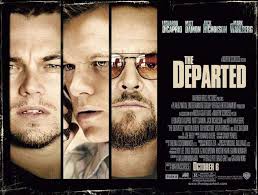
You can create alot of questions for example for the audiences in order to make them interested in what is happening and wonder what certain things have to do with the film. this is an example of how a simple device can improve a film dramatically by making the audience interested in it.
A plot has to have many characters and ideas to it if you are looking to make the film a deeper experience for the audience to view, and by linking them to the story , it can create a better movie, an example of simultaneous storylines branching from a main film is the departed, which has many main characters revolving around a story with many branch stories.
General film language
More certain film terms.
Continuity editing: When filming certain actions, we have to make sure that they look realistic and fluid in comparison to what the action would look like in everyday life. For example if filming someone opening and closing a door, you have to make it look like one fluid motion and not disjointed, if it does look this way, this is bad continuity and can make the audience aware of bad filming.
Enigmas: Enigmas are questions that are given to the audience by what is happening on screen, these can be such questions like who done it? why are they doing that? ect, these questions keep an audience intersted in what is happening on screen.
CliffHangers: These are events that happen at the end of a scene that make the audience wonder whats going to happen to the people in question in the scene? this could be danger or trouble.
Continuity editing: When filming certain actions, we have to make sure that they look realistic and fluid in comparison to what the action would look like in everyday life. For example if filming someone opening and closing a door, you have to make it look like one fluid motion and not disjointed, if it does look this way, this is bad continuity and can make the audience aware of bad filming.
Enigmas: Enigmas are questions that are given to the audience by what is happening on screen, these can be such questions like who done it? why are they doing that? ect, these questions keep an audience intersted in what is happening on screen.
CliffHangers: These are events that happen at the end of a scene that make the audience wonder whats going to happen to the people in question in the scene? this could be danger or trouble.
Suspense in Thrillers
Thriller movies rely on suspense in order to create an atmosphere that provokes the viewer into wanting to watch the rest of the movie whilst at the same time gives them an element of power as they know what some of the characters don't know on screen. This creates a will they/ wont they scenario of questions that revolves around the action on screen.
An Example of this is Alfred Hitchcock's "Rope"

In rope the story revolves around to men who have murdered someone in a test of intelligence to see whether or not they can get away with it . They store the body in a chest and cover it with a cloth. They then have a party in which they place decorations and food on the chest as they attempt to fool guests and get away with murder. The suspense lies with the audience in that we know that the body is in the chest but we then question whether or not the men will be found out by any of the guests.
An Example of this is Alfred Hitchcock's "Rope"
In rope the story revolves around to men who have murdered someone in a test of intelligence to see whether or not they can get away with it . They store the body in a chest and cover it with a cloth. They then have a party in which they place decorations and food on the chest as they attempt to fool guests and get away with murder. The suspense lies with the audience in that we know that the body is in the chest but we then question whether or not the men will be found out by any of the guests.
Maguffin
A Maguffin is a object in a movie that is the main character desires and although it may be the object of a film, it doesn't mean it is the central point of conversation and conflict in the film.
For example: In Alfred Hitchcock's film Notorious, the plot is that an American spy sends a woman to spy on her husband who is a Nazi, and is suspected to be doing something wrong. Infact the Nazis are plannig to steal uranium. In this case, the Maguffin in the Uranium.
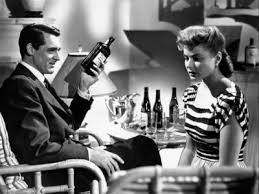
For example: In Alfred Hitchcock's film Notorious, the plot is that an American spy sends a woman to spy on her husband who is a Nazi, and is suspected to be doing something wrong. Infact the Nazis are plannig to steal uranium. In this case, the Maguffin in the Uranium.
Film Analysis
Here is some evaluations of the beginning of films that come under the thriller genre:
MEMENTO: Momento has a very interesting beginning but at the same time still come into the thriller genre by some of the conventions that it holds. For example it has a central question for the audience which is based on the story, so for example in Momento, the main questions are who and what is the man looking for? as the film is made backwards, we get those questions. It has a gritty style to it that is common in thrillers, and has some very graphic action that is common in violent, murder happy thrillers.
BRICK: Brick has a shocking opening that once again makes the viewer wonder what has happened prior to the scene we start with. It begins with a boy looking anxiously over the other side of a stream at a girl who appears to be dead. This immediately gives us a question as to what has happened, the music adds to the tension as well as there is a creepy xylophone style song playing in the background. When we realize he is a schoolboy at the end, we see a creepier side to the story.
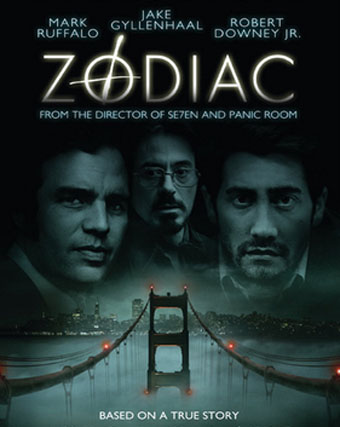
ZODIAC: Zodiac's suspense during the opening of the film comes from the murder that occurs when the married woman takes a younger man out to the woods during the 4th of July. The music does a great job of setting the mood at ease by being quite relaxed, but when the murderer returns back in his car we realize that there is a problem. The killing itself gives us the question of who killed them, and why?


MEMENTO: Momento has a very interesting beginning but at the same time still come into the thriller genre by some of the conventions that it holds. For example it has a central question for the audience which is based on the story, so for example in Momento, the main questions are who and what is the man looking for? as the film is made backwards, we get those questions. It has a gritty style to it that is common in thrillers, and has some very graphic action that is common in violent, murder happy thrillers.
BRICK: Brick has a shocking opening that once again makes the viewer wonder what has happened prior to the scene we start with. It begins with a boy looking anxiously over the other side of a stream at a girl who appears to be dead. This immediately gives us a question as to what has happened, the music adds to the tension as well as there is a creepy xylophone style song playing in the background. When we realize he is a schoolboy at the end, we see a creepier side to the story.
ZODIAC: Zodiac's suspense during the opening of the film comes from the murder that occurs when the married woman takes a younger man out to the woods during the 4th of July. The music does a great job of setting the mood at ease by being quite relaxed, but when the murderer returns back in his car we realize that there is a problem. The killing itself gives us the question of who killed them, and why?
Chuck Jones' 'rules'.
When creating the character and scenarios for the RoadRunner cartoon segment in Looneytoons. Creator Chuck Jones created a set of rules that they must obide by when creating the cartoon. For example, one of the rules was that the coyote may never harm the road runner and the road runner may not harm it, but only mock it by saying "meep meep". This is an example of rules in a production.
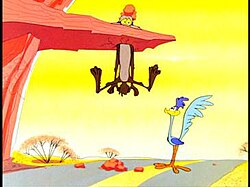
The road runner never actually touches the Coyote.
Films tend to have rules aswell depending on the genre and also just filming in general. An example of this is the 180 degree rule, this means that the camera must never flip over to the other side of a conversation during a scene, this is because if done otherwise the audience can gbecome confused with whats going on, on screen.
The road runner never actually touches the Coyote.
Films tend to have rules aswell depending on the genre and also just filming in general. An example of this is the 180 degree rule, this means that the camera must never flip over to the other side of a conversation during a scene, this is because if done otherwise the audience can gbecome confused with whats going on, on screen.
Subscribe to:
Posts (Atom)